The Grand MMTI was launched in 2009 through a generous multimillion dollar gift from Stephen and Nancy Grand, longtime supporters of UCSF, and a Howard Hughes Medical Institute Collaborative Innovation Award obtained by Peter Walter, Jim Wells, Kevan Shokat, Marc Shuman, Frank McCormick and colleagues. Translational research, at its best, is scientific research that facilitates the translation of basic science discoveries into practical applications that improve human health. This is most readily achieved via highly interactive, multi-disciplinary collaborations between clinicians and basic scientists working towards a common goal. The Grand MMTI is built around this vision and is one of UCSF’s most promising translational programs.
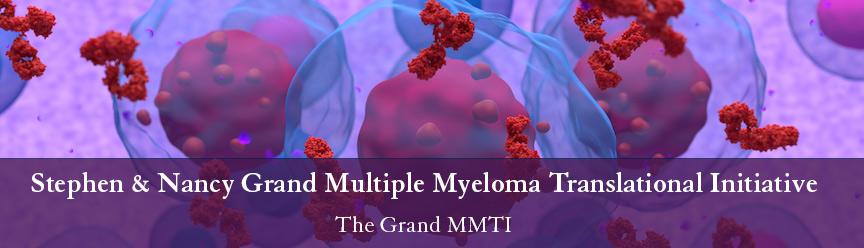
Multiple myeloma (MM) is a cancer of plasma cells, typically found in the bone marrow. These malignant plasma cells over-produce antibodies and other substances that cause organ damage by eroding bones and by causing kidney dysfunction, often the initial signs of this disease. Multiple myeloma is the second most common cancer of the blood, accounting for approximately 10% of blood cancers. About 65,000 people have this disease and 20,000 new cases are diagnosed in the United States every year. The peak age of the disease onset is 65 to 70 years of age, but recent statistics indicate that the disease prevalence is increasing and people are contracting the disease at a younger age. Although progress has been made in recent years against multiple myeloma, the disease remains challenging to treat, with insufficient therapeutic options.
>click here for more information about Multiple Myeloma
Build a world class multiple myeloma center on the west coast by leveraging UCSF resources (ground-breaking research & drug discovery, premier multiple myeloma clinical capabilities and a state-of-the-art cancer center) to develop innovative therapies that meet the current and evolving needs of multiple myeloma patients.
Since its inception, the Grand MMTI has, among other accomplishments: