
News
Soft Drink Companies Copy Tobacco Playbook to Lure Young Users
Tobacco conglomerates that used colors, flavors and marketing techniques to entice children as future smokers transferred these same strategies to sweetened beverages when they bought food and drinks companies starting in 1963, according to a study by researchers at UC San Francisco. The study

UCSF Oncologist Answers Pancreas Cancer FAQs on Facebook Live
Following the self-disclosure of Jeopardy's Alex Trebek that he is battling pancreas cancer, ABC7 News sat down with UCSF's Dr. Andrew Ko at our Mission Bay campus to discuss common questions about the disease. During the 30-minute Facebook Live broadcast, Dr. Ko discussed common side effects of
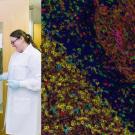
Feature: Biorepository and Tissue Biomarker Technology (BTBMT) Core
The goal of the Biorepository and Tissue Biomarker Technology Shared Resource (BTBMT) is to provide the infrastructure to support the life cycle and QA/QC of high quality biospecimens for cancer research. The multifaceted life cycle includes patient consenting, biospecimen acquisition, processing
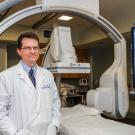
UCSF, UC Berkeley and 3D Printer Carbon, Inc. Team Up to Create a Drug Sponge to Absorb Excess Chemotherapy Medication
We know that many anticancer drugs are poisonous, leaving doctors with the careful task of administering enough chemotherapy to stop the growth of cancer cells while minimizing any damage to a patient's other organs. Steven Hetts, MD is the chief of Interventional Neuroradiology at UCSF Mission Bay
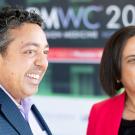
Highlights from the Precision Medicine World Conference 2019
For the fourth year, UCSF co-hosted the Precision Medicine World Conference, which attracted attendees from 35 countries to hear about the growing prominence of data science, artificial intelligence, and deep learning that is creating a sea change in nearly every aspect of health care and biomedical
UCSF's novel approach to a therapeutic cancer vaccine may provide a new option for patients relapsing with AML
An experimental cancer vaccine in early-stage development at the University of California San Francisco has sparked hope that patients with acute myeloid leukemia (AML), an aggressive cancer of the blood, could one day have a life-saving alternative, especially those prone to relapse or unable to
Q & A with Thea Tlsty, PhD, on Leading International Team to Study Inflammation and Cancer
“The Grand Challenge is designed to address really big, intractable questions in cancer. The idea is not to make small, incremental steps, but to make a huge leap forward.” Thea Tlsty, PhD from UCSF.edu, 1/23/19 $26 Million 'Grand Challenge' Project Will Probe Role of Inflammation in Cancer Thea D