

News

How Shared Resources Can Strengthen Your Research
Shared Resources—or Cores—are the Cancer Center’s scientific force multipliers, putting specialized expertise, cutting-edge technology, and practical know-how within reach of every investigator. They can help researchers design stronger experiments, avoid costly missteps, move projects forward

Building a Stronger Cancer Research Community at ZSFG
In late September, UCSF cancer researchers, trainees, and clinicians gathered on the Zuckerberg San Francisco General Hospital (ZSFG) campus for the first ZSFG Cancer Research Symposium held on site since before the COVID shutdown in 2020. Speakers covered the social drivers of health disparities

Office of Community Engagement Announces 2026-2027 Pilot Award Recipients
The Office of Community Engagement (OCE) of the Helen Diller Family Comprehensive Cancer Center (HDFCCC) announced the recipients of their 2026–27 Community Engagement Pilot Awards. These awards are intended to fund partnership projects where community-based organizations and UCSF academic partners
Treat a Deadly Brain Tumor Before It Recurs? This AI Tool May Help
A new AI-based model can predict where the most common malignant brain cancer is most likely to return after initial surgery, potentially giving doctors a chance to treat it before it becomes visible on MRI. Glioblastoma is the most lethal brain tumor in adults, with a median survival of about 17
How Scientists Cracked the “Undruggable” KRAS Cancer Mutation
Penny Wagnon walks into a San Francisco conference room. Outside, a February cold snap sharpens the breeze off the Bay. Wagnon weaves through tables arranged before a small stage and finds a seat. “Hi, I’m Penny,” she says cheerily. “I have lung cancer.” Her tablemates introduce themselves: name
Six Research Projects Funded Through UCSF Cancer Health Outcomes SPORE
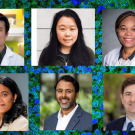
Six cancer research investigators are receiving grants this fall through the Cancer Health Outcomes Specialized Program in Research Excellence (CHO SPORE). This grant program, funded by the National Cancer Institute, supports translational research at UC San Francisco studying the biological and
How to Win a Nobel Prize: Advice on Science, San Francisco, and UCSF
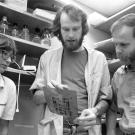
Today, we take for granted that cancers arise when genes in our cells go awry. But less than 60 years ago, scientists were still trying to understand the molecular machinery that drove it. Unlocking cancer’s secrets began with a chicken. By studying a virus that caused cancer in chickens, former UC