

News
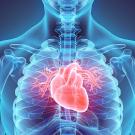
New Study Looks at Why Cancer Treatments Cause Heart Damage
New drugs and therapies have become indispensable for treating an array of cancers. Unfortunately, they can also cause damage to the heart, a side effect that has led to the development of a new discipline in medicine, called cardio-oncology. Now teams from UC San Francisco and Stanford University

Prioritizing Organ Preservation for Rectal Cancer Patients
Although rectal cancer is a life-threatening disease, it is highly curable in its early stages. Depending on the location and state of the cancer, surgery may be required. To avoid life-altering consequences associated with traditional rectal surgery, physicians are increasingly using treatment
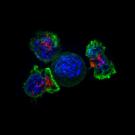
How this ‘Switchable’ CAR-T Therapy Sets its Sights on Deadly Brain Cancer
UC San Francisco treated its first brain cancer patient with an experimental new CAR-T therapy discovered and manufactured at the university earlier this year. The treatment, known as E-SYNC, is a form of “switchable” CAR-T therapy that can be turned on and off to better target cancer and reduce

Dr. Samuel Washington Wins 2024 PCF Young Investigator Award
The Prostate Cancer Foundation (PCF) aims to find future research leaders to bring new ideas and new scientific discoveries to prostate cancer research through its Young Investigator Awards program. Dr. Washington, an Assistant Professor in the Urology Department at UCSF, has received the 2024 PCF

Katherine Van Loon Named Editor-in-Chief of JCO Global Oncology
Katherine Van Loon, MD, MPH, has been appointed as the next editor-in-chief of JCO Global Oncology ( JCO GO), an American Society of Clinical Oncology (ASCO) journal. JCO GO is an online only open access journal focusing on cancer research, care and delivery in low-resource countries and settings
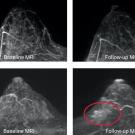
Detecting When DCIS will Progress to IDC
Ductal carcinoma in situ (DCIS) is a non-invasive form of breast cancer that can potentially progress to invasive cancer if left untreated. Early detection and treatment are therefore crucial. In a retrospective study of patients with DCIS who declined surgery and received endocrine therapy
Why Some Prostate Cancers Shouldn’t Be Called ‘Cancer’
Featured Expert Matthew Cooperberg, MD, MPH Professor, Urology Men could benefit from fewer unnecessary treatments and reduced anxiety if their doctors stopped calling certain changes in the prostate “cancer,” according to prominent UC San Francisco prostate cancer expert Matthew Cooperberg, MD, MPH