
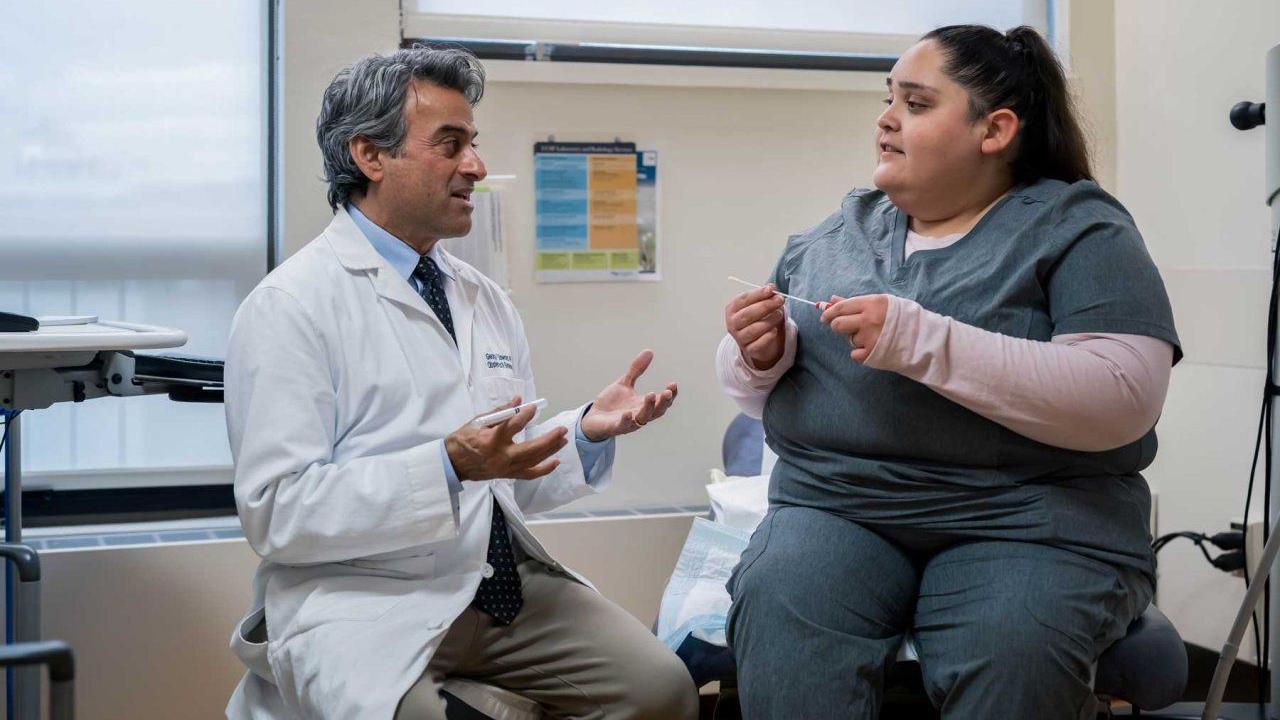
George Sawaya, MD, professor at the UCSF Department of Obstetrics, Gynecology and director of Zuckerberg San Francisco General Hospital and Trauma Center's cervical dysplasia clinic, explains how a self-collectted HPV test works to screen for cervical cancer. Photo by Susan Merrell C
Cervical cancer screenings are considered one of the most significant public health advances of the past 50 years, particularly in detecting HPV (human papillomavirus), the culprit of most cervical cancers.
This month, the U.S. Department of Health and Human Services updated cervical cancer screening guidelines to include a new option for women at average risk: self-collected HPV tests. The move followed similar recommendations a few weeks earlier by the American Cancer Society.
George F. Sawaya, MD, a UCSF professor of Obstetrics, Gynecology and Reproductive Sciences and Epidemiology & Biostatistics, is the senior author on a related study that found many women 21-49 years old strongly preferred a self-collected HPV test. He explains the benefits and impacts and why at-home testing was preferred by so many women.

Featured Expert
George F. Sawaya, MD
UCSF professor of Obstetrics, Gynecology and Reproductive Sciences and Epidemiology & Biostatistics
Is cervical cancer preventable?
Cervical cancer is highly preventable through screening. Unlike many other cancers that rely on detection at an early stage, cervical cancer has an identifiable precancerous abnormality that precedes cancer. It takes up to 10 years for these lesions to progress to cancer, giving us a lot of time to identify and treat them. Treatment is highly effective and safe, typically involving a 15-minute office visit.
How does HPV home testing work?
Several different sampling devices have been approved by the U.S. Food and Drug Administration for collecting vaginal samples to test for HPV, the virus behind nearly all cervical cancers. These samples are collected in either the clinic or at home and are sent to a laboratory. We hope to be able to offer them to UCSF patients soon.
What did your research find?
Last December, we published a nationwide survey with colleagues at the Centers for Disease Control and Prevention and found that about 70% of U.S. women were amenable to self-collected HPV tests. Of course, this also means that about 30% were not, so we need to continue to offer traditional — clinic-based provider-collected — HPV tests. We are moving into an era where patients should be given choices about how they want to be screened.