
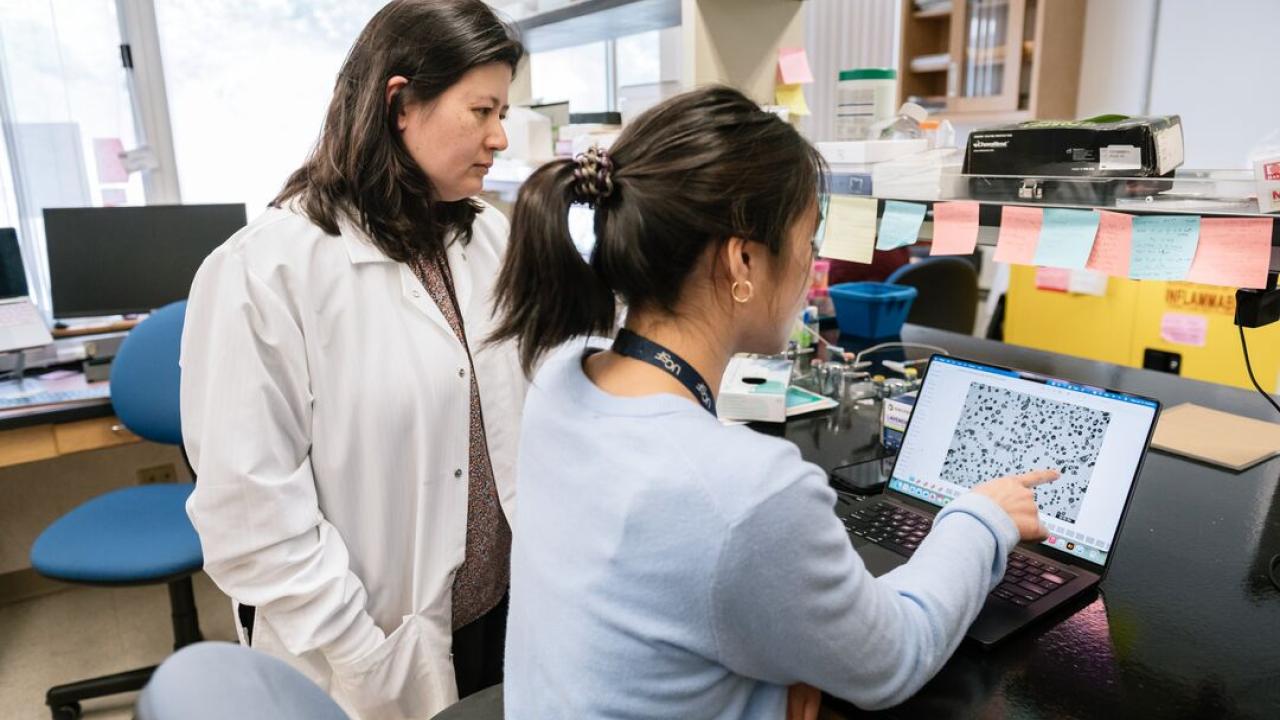
Researchers at UC San Francisco have developed a new method to predict how different types of breast cancer will respond to treatment, using patient data from an innovative clinical trial called I-SPY and rapid experimentation on lab-grown mini tumors.
The advance could hasten more personalized treatments for breast cancer, including the triple negative type, which is especially aggressive and hard to treat.
In their study, which appeared Aug. 6 in Cell Reports Medicine, the researchers found that the organoids were able to mimic a tumor’s response to treatment.
“The breast tumor organoids modeled how corresponding patient tumors responded to therapies and identified candidate combination therapies for cancers that don’t respond to standard treatment,” said the study’s senior author Jennifer M. Rosenbluth, MD, PhD, a medical oncologist and the Sulochana Pradhan, MD, Endowed Professor in Breast Cancer at UCSF. “These findings support organoid modeling as a bridge between clinical biomarkers and precision treatment strategies in breast cancer.”