
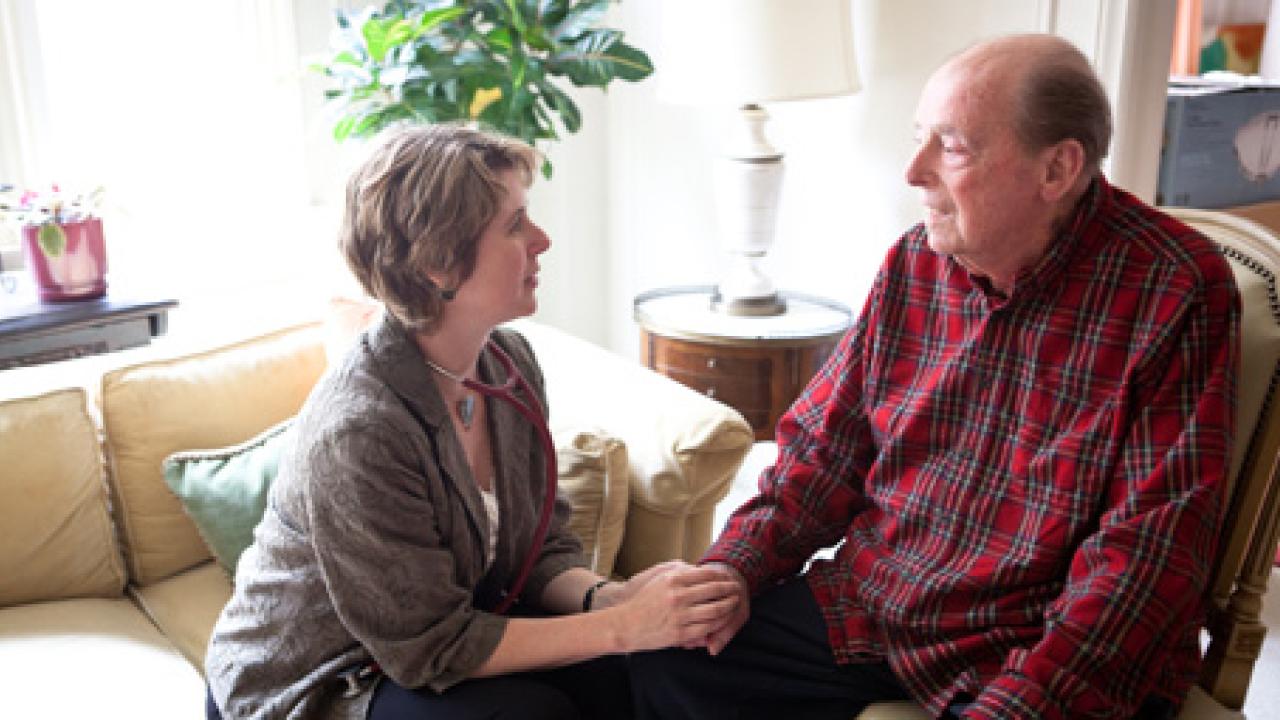
While cancer diagnoses have been increasing among younger adults, cancer is still more common in older adults, particularly those 60 years and older. As the population ages, the number of cancer cases is expected to rise, underscoring the need to tailor treatment strategies for older adults.
Today, the National Comprehensive Cancer Network® (NCCN) — an alliance of leading cancer centers — published the NCCN Guidelines for Patients®, Older Adults with Cancer, a new resource to help patients and caregivers understand the importance of assessments in cancer care and develop a treatment plan that best fits their needs.
The new guidelines for older patients were developed from the NCCN Clinical Practice Guidelines in Oncology, Older Adult Oncology, which were released Sept. 4. Both the clinical and patient versions of the guidelines include information about which assessment tools are available and how they should be used to help make decisions.
Louise C. Walter, MD, UCSF chief of Geriatrics, member of the UCSF Helen Diller Family Comprehensive Cancer Center, and vice-chair of the NCCN Guidelines Panel for Older Adult Oncology, helped to guide a diverse complement of stakeholders in developing these new guidelines.
“These patient guidelines help explain how to determine the right treatment for the right person based on their unique situation and preferences,” said Walter. “We all age differently. People should really be talking with their doctor about what makes sense for them as an individual, with their specific health situations, and come up with the best plan that's not based on chronologic age, but on what’s most important to them. The more informed a person can be, the better care they’re going receive, because they’re going to ask better questions.”
Some need more support than others
The guidelines flag ways to support people with cognition issues, or at higher risk for falls. They are geared toward anyone diagnosed with cancer over the age of 65 but could be relevant for younger patients with additional medical concerns. While the likelihood of side effects and comorbidities increase with age, the guidelines stress there is a wide range of mental and physical fitness that people can experience well into their 80s, 90s, and beyond.
“We are seeing more and more people being treated for cancer at an advanced age,” explained Efrat Dotan, MD, Abramson Cancer Center at the University of Pennsylvania, chair of the NCCN Guidelines Panel for Older Adult Oncology. “We need to carefully assess any patient over 65, because there can be a huge range in areas such as memory function, physical ability, or treatment interactions with other medications and conditions. This resource explains what support is needed and suggests how to talk to your doctor about it.”