
The UCSF Helen Diller Family Comprehensive Cancer Center recently honored three staff members whose service, leadership, and collaboration have made a lasting impact on the Cancer Center community. The honorees were selected through a formal nomination process and recognized during the HDFCCC Annual Clinical Research Staff Retreat held on April 16, 2026.
Ann Griffin, PhD, ODS-C, assistant director of the UCSF Cancer Registry, received the inaugural Enduring Impact Award; Dary Phen, a senior clinical research coordinator in Cutaneous Oncology, was named Clinical Research Coordinator (CRC) of the Year; and Paul Couey, a clinical research manager at Zuckerberg San Francisco General Hospital, was named Clinical Research Personnel of the Year.
Together, their work highlights the expertise and dedication that drive the Cancer Center's research enterprise.
Ann Griffin Receives Inaugural Enduring Impact Award
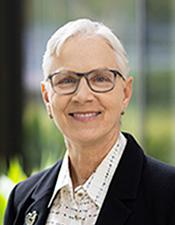
After 23 years of service, Ann Griffin, PhD, ODS-C, assistant director of the UCSF Cancer Registry, is retiring this month. Throughout her career, Ann has been a trusted partner to Cancer Center faculty and staff, providing expertise and guidance that have helped shape cancer research, reporting, and quality initiatives across the organization.
In recognition of her lasting contributions, Ann was named the inaugural recipient of the HDFCCC Enduring Impact Award. The award honors collaborators whose partnership, mentorship, and dedication leave a lasting mark on the Cancer Center, its people, and its mission. It recognizes individuals whose influence is felt throughout the work of the center, even when their roles extend beyond its walls.
Below, Ann reflects on the relationships and accomplishments that shaped her career, and offers advice for the next generation of clinical research professionals.
Q: What aspect of your work has been most meaningful to you?
The greatest reward has been the relationships we’ve built with our clinical research professionals over the years. Through countless collaborations and data requests, we’ve learned so much from one another. Those partnerships have helped us better understand the strengths and limitations of our data, identify missed cases, and occasionally uncover missing treatment information through linkages with external databases. It’s been incredibly meaningful to contribute to research while continuously improving the quality and completeness of our registry data.
Q: What does it mean to you to be selected as the inaugural recipient of the Enduring Impact Award?
Receiving this award brought tears of gratitude to my eyes. Throughout my career, the Cancer Registry has benefited enormously from its association with the clinical research community, and I have always felt fortunate to support that work. I was genuinely surprised and deeply touched to realize that my contributions have made a difference. I am so grateful to have worked with so many of you!
When I interviewed for this position in late 2003 with Drs. Margaret Tempero, Peter Carroll, and Bob Hiatt, they challenged me to connect the Cancer Registry with as many of the Cancer Center’s data resources as possible. Looking back, I am proud of how far we’ve come toward that vision. One of the most significant milestones was exporting 25 years of registry data into the Clinical Data Warehouse last year, helping make cancer data more accessible and useful for research across the institution.
Q: What is one change that has been especially meaningful or exciting to witness?
The most transformative change during my tenure has been the evolution from a largely paper-based medical record system to the electronic medical record environment we have today. That shift fundamentally changed how we access, manage, and use clinical information. Looking ahead, I am excited about the next chapter: integrating AI-based solutions to improve registry efficiency and support the growing demands of cancer research and data management.
Q: What is one piece of advice you’d share with the next generation of clinical research professionals?
Do your best to stay informed and continue developing your problem-solving skills. We work in an extraordinary environment, surrounded by talented people and endless opportunities to learn. Read widely, listen carefully, attend events, and engage with your colleagues. Be curious. Put new ideas together and ask, “What if?” Be patient with the process, and don’t be afraid to say “yes” to new challenges. Some of the most rewarding opportunities in my career came from being open to possibilities I never anticipated.
Recognizing Excellence in Clinical Research
While the Enduring Impact Award recognizes lasting contributions to the Cancer Center community, the Annual Clinical Research Staff Excellence Awards Program celebrates the oncology research professionals whose day-to-day work advances clinical research and supports patients, investigators, and colleagues.
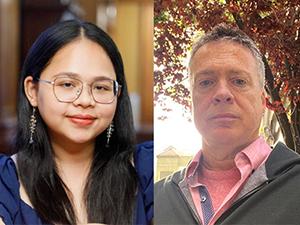
This year's honorees were Dary Phen, a senior clinical research coordinator in Cutaneous Oncology, who was named Clinical Research Coordinator (CRC) of the Year, and Paul Couey, a clinical research manager at Zuckerberg San Francisco General Hospital, who was named Clinical Research Personnel of the Year.
Below, Dary and Paul share their insights and experiences working in the dynamic field of oncology clinical research.
Q: Please tell us about your job in a few sentences. What do you do, and/or what does a typical day look like?
Dary: I manage multiple Phase I–III clinical trials, ensuring compliance with protocols, IRB, UCSF policies, and FDA regulations. I also served as the team’s dedicated lead for inpatient trials, including the department’s first T-Cell Receptor studies involving leukapheresis and complex inpatient coordination.
Paul: I supervise four talented individuals (2 CRCs, 2 senior CRCs) who run trials in the hematology and oncology clinics at ZSFG, a.k.a. “The County.” I’m the administrator for the ZSFG site committee, and I track accrual, data quality, and regulatory compliance for the program.
Q: What drew you to clinical research, and what do you enjoy most about your role?
Dary: I started this job hoping to learn more about the medical field and gain exposure to the clinical research scene. I enjoy thinking on my feet, problem solving, and helping patients. I love that even though I have been here for 2.5 years, I am still learning new things every day.
Paul: I was first exposed to clinical research in the 90s when I worked at an HIV clinic in Los Angeles, at a point when the epidemic was still raging and our patients had very little hope for progress. I learned enough to bluff my way into a job at the AIDS Research Consortium of Atlanta just as effective therapies were coming online, thanks to game-changing clinical trials. It was an inspiring time to become a study coordinator. After four years there and another eight years at the UCSF Community Consortium, I left HIV research for hematology-oncology – and I’ve been at ZSFG ever since.
ZSFG is special to me for a few reasons, but primarily because the people who work here are so dedicated to meeting the patients where they live. For many of our patients, their cancer diagnosis and, certainly, the notion of clinical trial participation, take a back seat to more pressing issues like unstable housing and finances, substance dependency, food insecurity, and mental health disorders. Their health literacy tends to be quite low, so we often have to preface the informed consent discussion with the most basic explanation of clinical research as a concept. I’m proud to work with a team that’s so invested in creating access to trials – making research participation a part of the treatment experience, despite the challenges.
Q: In addition to recognizing a sustained commitment to excellence, this award honors clinical research staff who foster a positive work environment across the Cancer Center. How important is collaboration to your work? What are some ways that you try to have a positive impact on your colleagues?
Dary: A lot of the trials I handle have components that require many teams across the Cancer Center to be involved, and I believe it is important to be communicative and open to learning, as teams tend to have different workflows and can learn from one another. For example, my team recently opened new studies that require inpatient components at Parnassus, which was something we had never done before. We were able to successfully open these studies with the help of many staff members who were more knowledgeable about the inpatient workflow at Parnassus. While I had the opportunity to learn the new workflows, my team handled our other responsibilities, and in return, I brought that knowledge back and helped teach everyone on the team. Without collaboration, this would not have been possible.
Paul: I think that, for an enterprise as complex as clinical research, success depends on good communication. It’s important that CRCs are able to convey information clearly and completely and to listen with empathy, whether they’re explaining study procedures to a patient, collecting and reporting adverse event data, or troubleshooting logistical issues with collaborators. I also want the team to feel they can openly voice questions or concerns with each other and with me. To that end, we meet twice a week as a group: briefly on Mondays to plan for the week and ask for assistance as needed, and for a longer meeting on Wednesdays to report accrual, AEs, deviations, and other updates, as well as plan the agenda for a third meeting with ZSFG faculty on Thursdays. Additionally, I have regularly scheduled one-on-one check-ins with each team member to discuss study progress, bandwidth, and professional growth. My hope is that this fosters unity and a sense that each perspective is important and recognized.