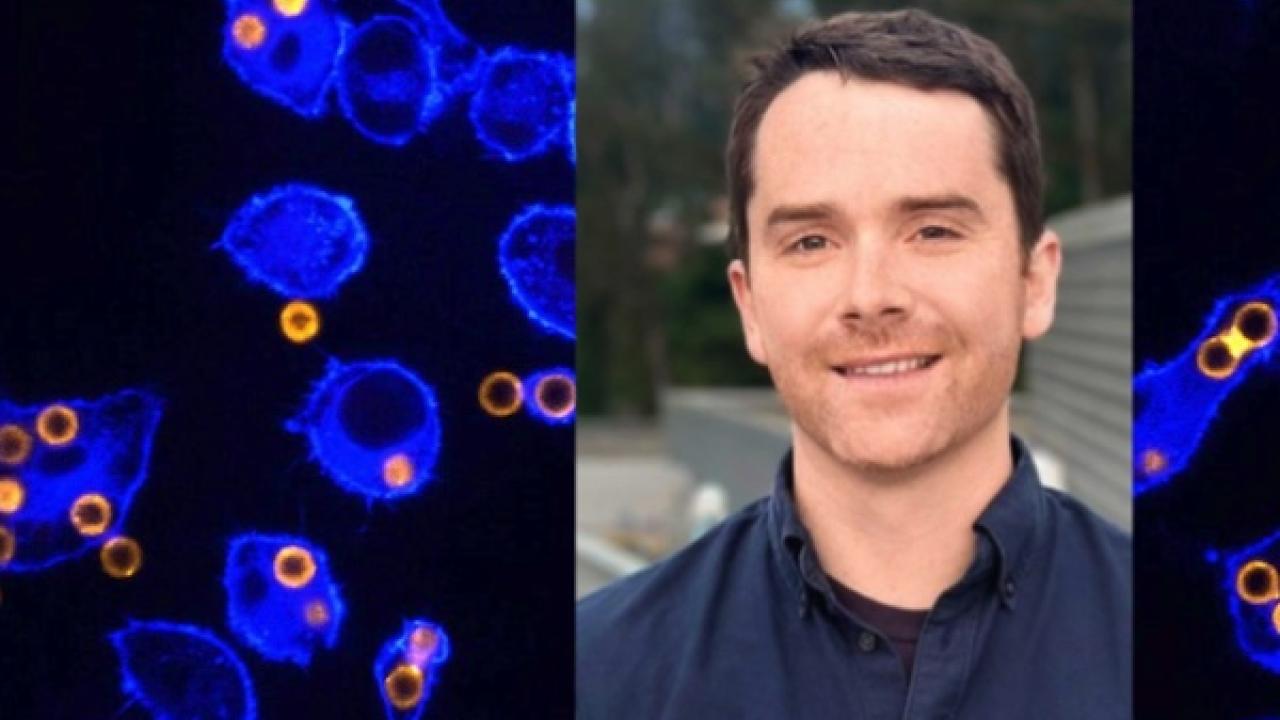
Roarke Kamber, PhD, an assistant professor in the Anatomy department at UC San Francisco, has been named a 2026 Pew-Stewart Scholar, an award that supports early-career scientists who pursue breakthroughs in cancer development, diagnosis, and treatment.
Kamber studies macrophages (“big eater” in Greek), the immune system’s garbage disposal cells. They consume sick or dead cells — up to 200 billion per day in each of us — plus pathogens and debris.
But many cancers lure macrophages into tumors to do the cancer’s bidding instead. These “tumor-associated macrophages” shield tumors from immune attack, build the tumor’s blood supply, and clear paths for tumor cells to enter blood vessels and spread.
Kamber wants to re-train macrophages to destroy cancer rather than assist it. His work builds on the success of CAR T-cell therapy, which uses engineered T-cells to fight cancer. CAR T therapies work well against blood cancers, like leukemia, but not solid tumors, like those of the breast, lung, or pancreas.
“Solid tumors ward off T-cells yet they’re full of macrophages that have been co-opted,” Kamber said. “Those macrophages are poised to fight hard-to-treat cancers, and we want to unlock that potential.”
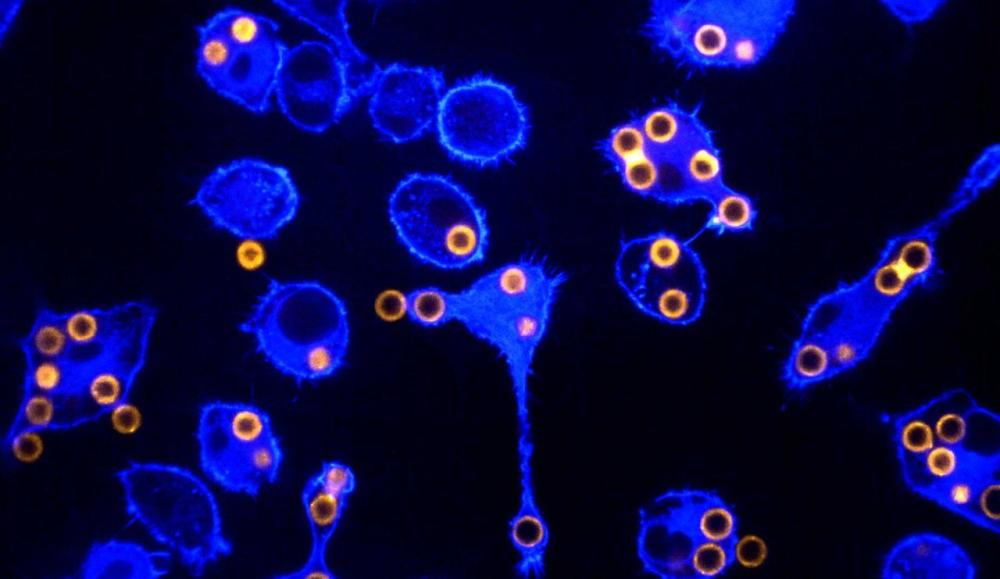
Macrophages (blue) were engineered with a chimeric antigen receptor (CAR), enabling them to eat beads (orange) that were coated with a tumor protein. Roarke Kamber, PhD, is engineering these “big eater” immune cells to fight cancer. Image by Thanos Syntrivanis, Kamber Lab
Kamber is adapting the cancer-targeting receptors from CAR T-cell therapy to work in macrophages. He's also engineering macrophages to more readily eat tumor cells, since they’re naturally picky eaters.
“Macrophages typically weigh hundreds of factors to decide whether or not to eat,” Kamber said. “We’re bypassing that decision-making to lead them to a clear ‘yes’ when they see cancer.”
As a Pew-Stewart Scholar, Kamber will receive $300,000 over four years and join a network of researchers united in their efforts to defeat cancer.