



News
How Scientists Cracked the “Undruggable” KRAS Cancer Mutation
Penny Wagnon walks into a San Francisco conference room. Outside, a February cold snap sharpens the breeze off the Bay. Wagnon weaves through tables arranged before a small stage and finds a seat. “Hi, I’m Penny,” she says cheerily. “I have lung cancer.” Her tablemates introduce themselves: name
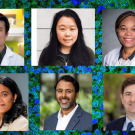
Six Research Projects Funded Through UCSF Cancer Health Outcomes SPORE
Six cancer research investigators are receiving grants this fall through the Cancer Health Outcomes Specialized Program in Research Excellence (CHO SPORE). This grant program, funded by the National Cancer Institute, supports translational research at UC San Francisco studying the biological and
How to Win a Nobel Prize: Advice on Science, San Francisco, and UCSF
Today, we take for granted that cancers arise when genes in our cells go awry. But less than 60 years ago, scientists were still trying to understand the molecular machinery that drove it. Unlocking cancer’s secrets began with a chicken. By studying a virus that caused cancer in chickens, former UC
UCSF’s Kevan Shokat Wins Stephenson Prize for Cancer Breakthrough
Kevan Shokat, PhD, a professor of Cellular and Molecular Pharmacology at UC San Francisco who discovered how to disable KRAS, a seemingly unstoppable cancer-driving protein, has won the Stephenson Global Prize for research in pancreatic cancer. The prize, which comes with $1 million, was given at

Meet the Postdocs Turning Images into Answers: Part 1
During national Postdoc Appreciation Week, we’re pleased to recognize a few of the researchers who are moving imaging science forward with their curiosity and collaboration. Be sure to read Part 1 and Part 2 of this celebration. The four postdocs profiled here work on advanced MRI techniques for

Here’s the Latest Research Lobular Breast Cancer Experts Are Leading
Invasive lobular carcinoma (ILC) is the second most common type of breast cancer but is challenging to detect because of how it spreads in breast tissue. ILC has been understudied compared to other types of breast cancer and there is a continuing need for better detection and treatment strategies

Two New Guides Released to Help Older Patients with Cancer
While cancer diagnoses have been increasing among younger adults, cancer is still more common in older adults, particularly those 60 years and older. As the population ages, the number of cancer cases is expected to rise, underscoring the need to tailor treatment strategies for older adults. Today